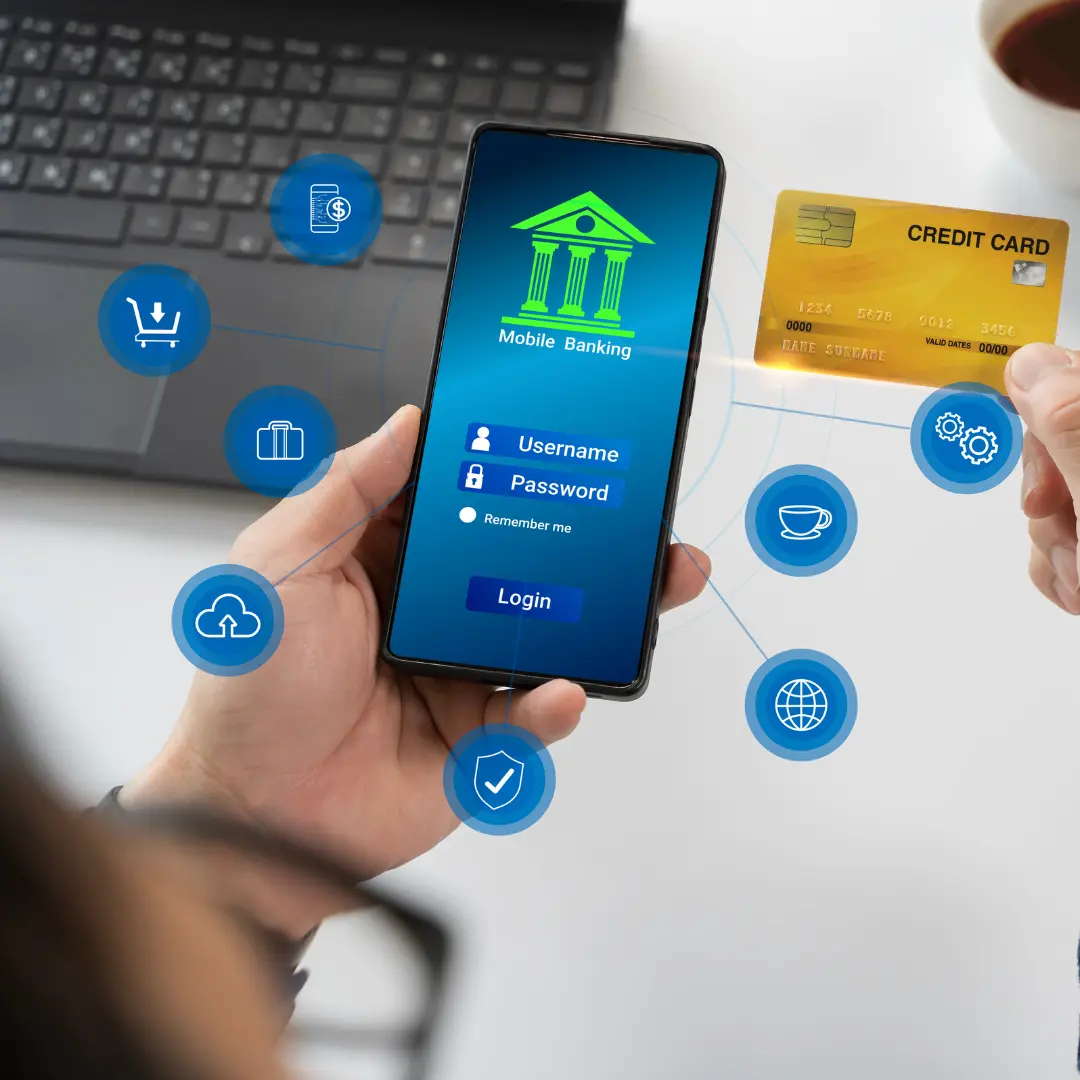
Banking, Financial Services, and Insurance Apps Security
Protect BFSI apps with advanced & comprehensive threat detection and response.
BFSI applications are no longer attacked through a single vulnerability. As financial applications become more connected and complex, VAPT alone cannot provide continuous protection.
Bugsmirror MASST helps BFSI organizations protect what matters most; customer trust, financial workflows, sensitive data, and app integrity.
Billions in Financial Activity Runs Through Digital Applications
Banking and financial services are increasingly delivered through mobile and digital channels. A single application may provide access to accounts, payments, personal information, financial products, and transaction services. This concentration of value makes BFSI applications attractive targets for attackers if it is not secured by a layered and comprehensive runtime security.
Bugsmirror MASST helps BFSI organizations secure the application lifecycle across security testing, red teaming, runtime protection, code hardening, API security testing and threat monitoring, enabling a comprehensive DevSecOps security approach.
Security Challenges BFSI Apps Facing
Protecting Financial Applications Against a Continuously Evolving Threat Landscape
Compliance & Regulatory Requirements
BFSI applications must continuously align with evolving regulatory and security requirements while protecting sensitive customer and financial information. Meeting these requirements requires security controls across application testing, data protection, runtime security, fraud prevention, and monitoring.
Recommended controls: Continuous security assessments, vulnerability management, runtime monitoring, audit-ready reporting, and security controls aligned with applicable RBI, SEBI CSCRF, NPCI, and OWASP MASVS requirements.
Device Binding Fraud
Mobile banking applications rely on trusted SIM and device associations to help verify the legitimacy of a user and their transactions. Attackers can target these binding mechanisms through SIM-related attacks, SMS hooking, device compromise, or application-level manipulation to gain unauthorized access.
Recommended controls: Hardware-backed attestation, server-side validation of RASP controls, application integrity checks, runtime threat detection, and SMS hooking detection.
Rooted & Compromised Devices
A rooted, jailbroken, or malware-infected device can weaken the protections an application normally relies on. Attackers may gain visibility into application processes, manipulate data, or interfere with authentication and transaction flows.
Recommended controls: Device integrity validation, root/jailbreak detection, emulator detection, malware indicators, device-risk assessment, and runtime enforcement.
Sensitive Financial Data Exposure
Sensitive customer and financial data can leak through insecure local storage, logs, screenshots, backups, exposed APIs, or unsafe platform interactions. Once data leaves the intended security boundary, the impact can extend from privacy loss to fraud and regulatory exposure.
Recommended controls: Secured data handling, hardened APIs, controlled platform interaction, and runtime safeguards.
Reverse Engineering
Once attackers understand an application's internal logic, they can identify security checks, endpoints, sensitive strings, and exploitable workflows. The more valuable the application's logic, the greater the incentive to analyze the binary.
Recommended controls: Code encryption, anti-static analysis, anti-debugging, and application shielding.
Account Takeover & Credential Stuffing
Attackers through phishing, malware, or compromised devices gain unauthorized access to banking and financial accounts. Once an account is compromised, attackers may attempt to access sensitive information, exploit stolen credentials, change account details, or initiate fraudulent transactions.
Recommended controls: Strong authentication controls, device and session validation, app and device integrity detection, risk-based checks, red teaming assessments, and runtime threat protection.
Hooking, & Runtime Instrumentation
Dynamic instrumentation lets attackers observe and alter application behavior while it is running. Functions, memory, API calls, SMS or security checks can be modified to bypass controls or influence protected workflows.
Recommended controls: Anti-hooking, anti-debugging, SMS spoofing detection instrumentation detection, runtime integrity verification, and active runtime response.
Application Tampering & Repackaging
Attackers can modify a legitimate banking or fintech application, bypass built-in checks, and redistribute a manipulated build. This creates a trusted-looking entry point for abusing application functionality or harvesting sensitive information.
Recommended controls: Application integrity checks, anti-tampering, repackaging detection, runtime code verification, and application shielding.
Overlay, Keylogger and Accessibility
Malicious apps can exploit the mobile environment to interfere with sensitive screens or capture information presented to the user. These attacks become more dangerous when they occur during authentication or high-risk financial actions.
Recommended controls: Overlay detection, keylogger detection, secure UI controls, screen-protection measures, controlled platform interactions, and runtime threat detection.
Continuous Security for BFSI Apps
Security Controls That Remain Visible Across the Application Lifecycle
Mobile App Compliance & Control
Total Protection
Bugsmirror MASST helps organizations strengthen end-to-end mobile application security while supporting DevSecOps. It provides greater control over code hardening, runtime protection, server-side RASP validation, red teaming, hardware-backed attestation, and continuous threat monitoring.
Mobile App Threat Monitoring & Response
Built for the BFSI Ecosystem
Protect the Applications Behind Critical Financial Services
Banking Applications
Secure mobile banking experiences handling accounts, payments, authentication, customer information, and financial transactions.
Lending & Digital Credit
Protect applications responsible for customer onboarding, identity, credit workflows, financial information, and sensitive APIs.
Insurance Applications
Secure digital insurance platforms handling customer identities, policies, claims, documents, and financial information.
Wealth & Investment Applications
Protect applications providing access to portfolios, investments, financial information, and high-value customer accounts.
Payment & Fintech Applications
Secure applications and APIs supporting digital payments, financial products, account services, and transaction workflows.
UPI Applications→
Secure UPI applications handling payment transactions, authentication, device binding, APIs, and sensitive customer information.
Real-World Red Teaming: Bypassing SIM Binding in a Payment App
SIM binding is commonly used to strengthen the relationship between a payment application, the user's mobile number, and device. But security controls must be tested against real attack techniques, not just assumed to be effective.
In a real payment application assessment, Bugsmirror ThreatLock demonstrated how SIM binding could be bypassed, highlighting why BFSI applications need red teaming to identify weaknesses that conventional security checks may miss.
Your Complete Mobile Security Stack
Everything you need to secure your applications from development to runtime.






Compliance Across Industry Security Standards
Bugsmirror MASST helps you meet and exceed the expectations set by your industry’s regulatory authorities.

OWASP MASVS
RBI Digital Payment Controls

SEBI CSCRF GUIDELINES
NPCI Guidelines - UPI Framework

Mobile Payments on COTS (MPoC)
Protect Your BFSI Applications Before Attackers Find the Weakness.
Empowering leading enterprises to protect their digital assets with next-generation security.



















Let's Talk Security
Fill out the form below and our security experts will reach out to you shortly.
Learn More From Our Security Blog
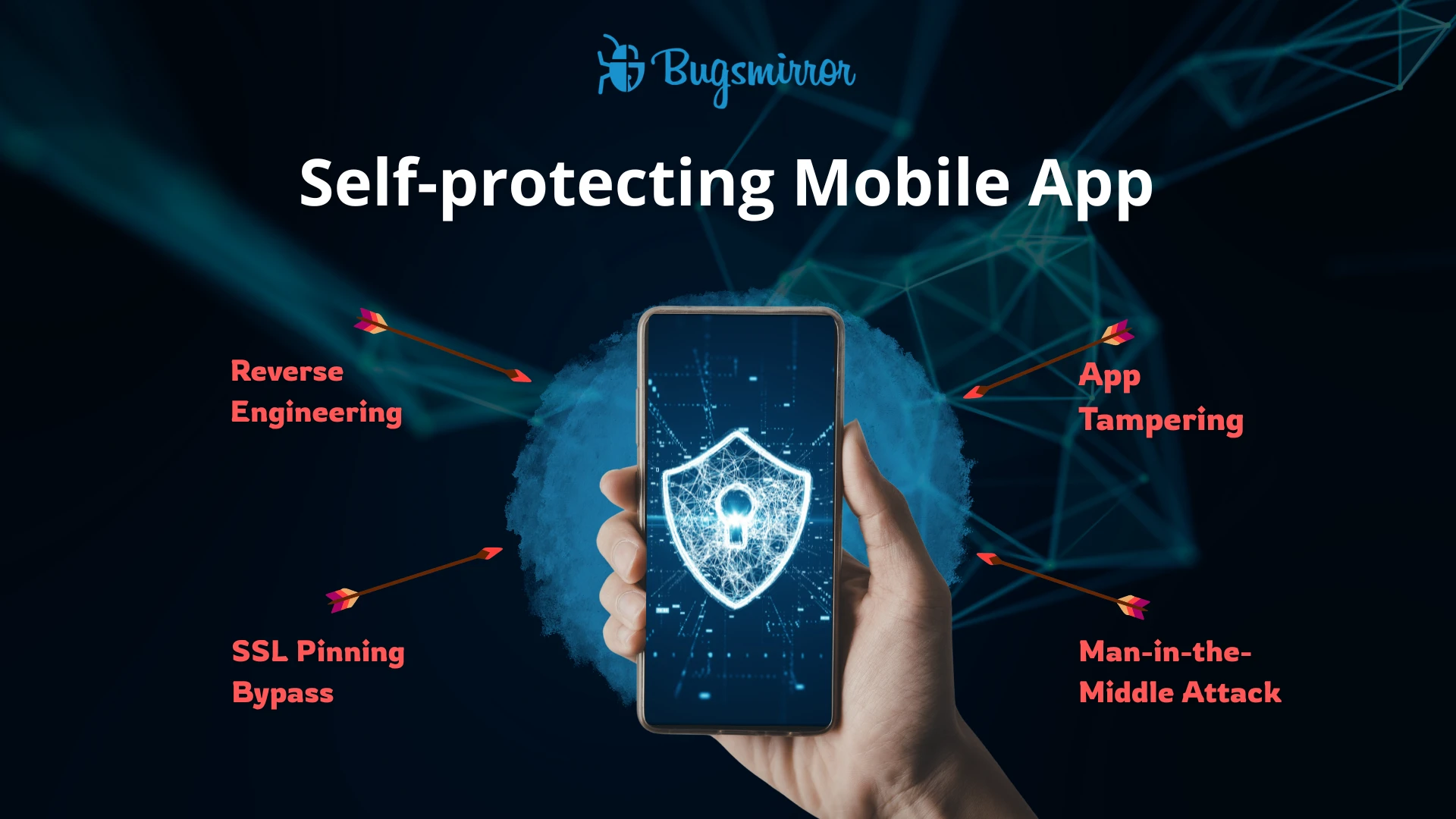)
How can one make self-protecting mobile apps?
Mobile applications operate in untrusted environments where attackers attempt reverse engineering, runtime manipulation, data interception, and tampering. Building self-protecting mobile apps requires embedding runtime security controls directly within the application. This blog explains how developers can implement RASP (Runtime Application Self-Protection), app shielding, device integrity checks, secure communication controls, and anti-tampering mechanisms to strengthen mobile security.
Why Mobile App Shielding Is Essential for Modern Fintech Apps
Mobile app shielding plays a crucial role in protecting fintech applications by embedding security directly into the app itself. Unlike traditional security approaches that rely heavily on backend protection, shielding ensures that the app can defend itself even in compromised environments. It helps prevent unauthorized access, detects malicious behaviour in real time, and safeguards APIs and business logic from abuse.