Top Mobile App Security Assessment Tools for Android and iOS
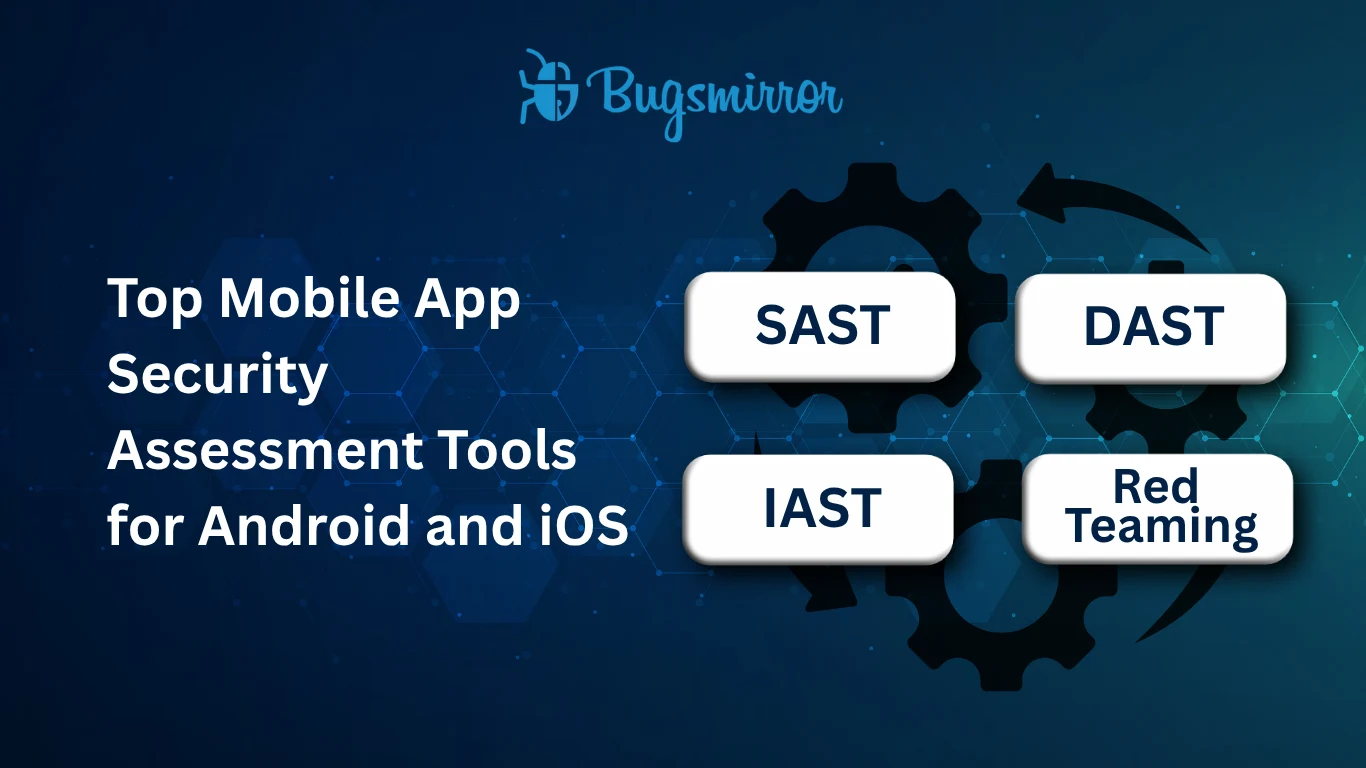
Mobile applications are no longer just user interfaces. They handle payments, authentication, personal information, business logic, and connections to critical backend systems. With the growing attack surface, mobile app companies should focus equally on security with functionality.
Application security threat report shows that 87% of applications in its monitored dataset were under attack in 2026. The reports also observed attacks against 89% of monitored Android applications and 86% of monitored iOS applications.
These numbers are increasing every day and with the involvement of AI, attacks have become sophisticated and easier. Applications need to be assessed for vulnerabilities, insecure APIs, weak authentication, data exposure, tampering, reverse engineering, and compromised runtime environments.
Mobile App Security Assessment tools are designed to address these risks. A combination of assessment tools can help security teams examine Android and iOS applications in different stages of DevSecOps, identify vulnerabilities, and continuously validate whether security controls are working as intended.
What should a mobile app security assessment cover?
A mobile app security assessment should examine an application across its code, runtime behaviour, APIs, data handling, authentication, device environment, and resistance to common attacks.
Which tools are used to assess Android and iOS applications?
For Android and iOS applications, different assessment tools are used depending on what needs to be tested. Static analysis tools examine application packages and binaries, dynamic testing tools assess security measures during app execution, and API testing tools test communication channels between the mobile app and backend services.
How do static analysis tools find mobile app vulnerabilities?
Static application security testing tools analyse app code, bytecode or binaries to find our vulnerabilities without executing the application. It is conducted in the development stage of mobile app lifecycle to identify vulnerabilities such as hardcoded secrets, insecure configurations, exposed components, weak cryptography, and other security weaknesses.
How does dynamic testing identify runtime security issues?
Dynamic testing evaluates an application while it is running in a real or controlled device environment. It can reveal vulnerabilities related to authentication, network communication, runtime behaviour, device integrity, insecure interactions, and application responses that may not be visible through static analysis alone.
Why should API security be part of a mobile app security assessment?
A mobile application can have strong client-side protection and still be exposed through insecure backend APIs. API assessment helps identify issues such as broken authorization, excessive data exposure, weak authentication, improper input validation, and unauthorised access to sensitive functions.
Can security testing detect reverse engineering and app tampering?
Security testing identifies weaknesses that can lead to reverse engineering and app tampering. Assessment should include checks for code protection, application integrity, anti-tampering controls, certificate handling, and the application’s behaviour and response to compromised environments.
Key factors organisations should consider when choosing a mobile app security solution
Organisations should look for a comprehensive mobile app security solution for the whole DevSecOps lifecycle of the application. Comprehensive mobile app security solutions should include:
- Coverage of Android and iOS applications both.
- Static, dynamic, API testing, red teaming capabilities.
- Regression testing.
- Automation.
- Detailed reports.
- Compliance requirements.
- Hassle-free integration with existing development workflows.
To build a solid mobile app security assessment strategy, organisations should combine these multiple layers rather than relying on one testing tool. Using a layered security approach every time you make changes or a release can avoid attacks and save your time. In this approach, manual and automated testing can investigate complex attack paths, validate application behaviour, and runtime protection can help defend the application after deployment.
How does Bugsmirror MASST offer a layered mobile app security assessment?
Bugsmirror MASST (Mobile Application Security Suite & Tools) provides a layered approach to mobile app security, covering security testing, runtime protection, server-side validation, and continuous threat visibility though a unified SaaS platform. It helps organisations integrate security across the mobile application lifecycle, from development and assessment to post-deployment protection.
- SAST: CodeLock performs static application security testing to identify 30+ security threats in application code and provides a detailed assessment report within minutes to a few hours.
- DAST: RunLock performs dynamic application security testing to identify 50+ security threats by analysing the application in a runtime environment.
- API Security Testing: APILock assesses application APIs for security weaknesses and provides a detailed report to help teams identify and remediate API-level risks.
- Red Teaming: ThreatLock provides manual red teaming to identify vulnerabilities through real-world attack scenarios. It also includes regression testing to verify fixes and ensure identified vulnerabilities have been properly addressed.
Beyond security assessment, Bugsmirror MASST provides multiple layers of protection for applications after deployment.
- Runtime Security: Bugsmirror Defender detects and blocks 50+ runtime threats in real-time, including rooting, jailbreaking, SMS hooking, application tampering, and threats associated with device-binding fraud.
- Anti-Reverse Engineering: Bugsmirror Shield provides advanced code protection and encryption, making critical application logic significantly harder to analyse, understand, and modify through static reverse engineering.
- Server-Side Security Validation: Trust API Bind (TAB) strengthens API communication by validating application requests on the server side, helping prevent unauthorised or manipulated requests from reaching sensitive backend APIs.
- Threat Visibility and Intelligence: ThreatLens provides live visibility into threats detected across applications, users, and devices, helping security teams monitor attacks and investigate threat activity from a centralised dashboard.
Build mobile app security beyond assessment
Bugsmirror is an India-based cybersecurity solutions provider focused on mobile application security research and development. Its security research team has identified and responsibly reported more than 1,250 vulnerabilities in Android, which further strengthened the research behind its mobile security solutions.
With MASST, organisations can move beyond point-in-time security assessments and combine security testing, application hardening, runtime protection, server-side validation, and continuous threat intelligence within a layered mobile security strategy.
Identify vulnerabilities before release and protect your application against runtime threats after deployment with Bugsmirror MASST.
Start your Mobile App Security Assessment with Bugsmirror MASST.
Share this article
Help others discover this content
Don’t give fraud a way in. Secure every layer of your mobile app.
100M+
Users Protected
100+
Apps Secured
1000+
Apps Hardened